“Shoot Christians Say”

holy shit 2

“Love the Sinner, Hate the Sin” was the first statement we looked at in our new teaching series that started last week: “Shoot Christians Say.”

“Shoot” was a Southern Baptist substitute for the more colorful cuss-word.  Saying “shoot” was fine in that world.   Saying  the other word was not.   We compromised in the series by using punctuations marks: “S*@#! Christians Say.”

I ran out of time before I ran out of sermon – which is not unusual.  So, in this space, I will finish.  

“Love the Sinner, Hate the Sin” has most often been used to refer to the LGBT community.  I first heard it some 15-20 years ago.  It was an attempt to maintain and express a strong protest against a behavior while showing a love for the individual. 

I never used it.  It didn’t ring true to me then.  It certainly does not now. 

To me, it is like saying “I love left-handers but hate their left-handedness.”  Strangely enough, being left-handed was, at one time, associated with sin and still is in some circles.   Throughout the Bible the right-hand is given higher status than the left.  People took the metaphorical use of “right-hand and left-hand” and developed a theology around it.  Left-handedness became associated with evil.  In 19th century Europe homosexuals were referred to as “left-handed.”  In Protestant-majority parts of the United Kingdom, Catholics were called “left-footers,” and vice versa in Catholic-majority parts of Ireland and Irish America.  

“Love the Sinner, Hate the Sin” is not just a statement about what someone is doing, but about who they are.  

To condemn the behavior is to condemn the orientation.  It’s like saying, “I love you, but I hate your freckles.”  “I love you, but the color of your eyes is unacceptable.”  

A friend told me that it was after he heard a preacher state “Love the sinner, hate the sin,” that he attempted to take his own life.  Certainly, his despair was not due to the pastor’s statement alone but the statement was, to him, the tipping point.   To hate the behavior was to hate him and who he is.  

Our society is split on the issue.  Our churches are too.  The position held by the church has changed over the years.  There was a day in which the church did not even recognize the possibility of sexual orientation.  Homosexuality was a choice and choice only.

There are 6 passages in the Bible, written by Moses and Paul, that address some form of same-sex behavior.  Today, a growing number of Christ-followers, myself included, wonder if these passages express God’s will for us today.  Think about it:

*Is it possible that these writers describe same-sex acts that even LBGT folks today would condemn? 

*Many scholars question whether the Biblical writers even had “sexual orientation” in their mental dictionary.

*Are these passages similar to the Bible passages that very clearly condone slavery or prohibit women from speaking in church or from teaching older boys and men – verses that reflect a cultural norm rather than God’s will?  (Am I the only one who has a problem with the Bible condoning slavery or prohibits women from teaching?) 

I have friends and members of the church I pastor, who are on different sides of the issue.  Some see me as compromising the truth.  I get that.  I would have said the same thing about me at one time in my life.  

Regardless, I want to love.  In the context of love we can understand.  We can grow.  

Over the next few weeks, we’ll look more closely at some of these phrases many of us say without thinking of what they really mean.

For Such is the Kingdom

Love Comes Naturally


One of the most frequently told stories of my childhood in a Southern Baptist Sunday School was of “Jesus and the Children.” Matthew records two events in back-to-back chapters.

In Matthew 18, Jesus uses a child to answer the adults’ adult question, “Who then is the greatest in the kingdom of heaven?”  We see some adults today who are obsessed with being “the greatest” or “the best.”

Jesus answered the question by calling a child to stand beside him.  “Here’s the ‘who’ you were asking about…and if you don’t change and become like this child, you won’t even enter the kingdom much less be the greatest in the kingdom.”  Whoa.  Probably not the answer the adults were expecting.

In the next chapter, Matthew records the disciples acting like Jesus’ gatekeepers, rebuking parents for bringing their kids to Jesus.  The disciples must have thought Jesus had more important people to see than children.  Jesus came back with,  “Your thinking is wrong.  Let the children come to me.  Stop stopping them.  For the kingdom of heaven belongs to such as these.”

As a child, these stories gave me comfort  – “Jesus loves me!”

As an adult, these stories give me pause – “What does Jesus mean?”

I don’t know.  Do you?

My experience with my 8 year old lunch buddy helps me a bit.  “Lunch Buddy” is a program of the Big Brother’s organization. He and I have been “buddies” for 4 years.

We were playing “Go Fish” and I asked him if he liked to play games with his family.  He said he did but that his uncle gets mad when he loses the game and throws things.

“What do you think about that response?” I asked.

“I think it’s stupid,” he answered.

“Why is it stupid?” I probed.

My lunch buddy, in a matter-of-fact manner replied, “Because it’s just a game.  Get over it.”

A wise 8 year old.

Children often show more wisdom than adults.

A 3-year old said, “It’s ok if she isn’t kind to me.  I can show her how.”

After seeing a spider web, a lady said, “That’s a pretty web.  I don’t like spiders, though.”  Her 6 year old nephew, in a serious tone replied, “You have to appreciate the spider to appreciate the web.”

A 2-year old said to her mom, “Mommy, I make you happy; you make me happy too.  Everybody should make everybody happy.”

Children seem to have a goodness, a sense of fairness, a generosity, a wisdom, an innocence that adults have lost.  Is Jesus telling us in these events recorded by Matthew that there is something good and pure at the core of our being that needs to be re-discovered and nurtured?

Is that the conversion Jesus describes in Matthew 18:3 (change and become like children)?

Thomas Merton puts it like this: “For me to be a saint means to be myself.  Therefore the problem of sanctification and salvation is in fact the problem of finding out who I am and of discovering my true self.”

I saw in my lunch buddy who I wanted to be.

I saw in him who my true self is.

That’s the kingdom.

Is Racism Still a Thing?

racism


“Why do you talk about racism?”  That’s the question I was asked by a man who had told me he was looking around for another church.

“Racism may have been a problem in your day, but we’re over it today,” the 30-something claimed.

“In your day” is kind of an “ouch” phrase, but I appreciate it.  I don’t want to be guilty of bringing into the present the problems of the past.

But, is racism an ancient problem of days gone by?  Oftentimes when I talk about racism, I get some push back:

“No one owns slaves.”

“I never see racism.”

“What I see is discrimination against whites.”

“We had a black President!”

What do you think?

Before you answer, read what happened to me last week.

I was at Sam’s Club in the fresh fruit section.   A food sampling stand made the aisle really narrow and crowded.  A narrow aisle and a wide cart.  And, I didn’t park my cart very well.  It was  sticking out into the aisle a bit.    Two African American ladies, maybe mother and daughter, were pushing their cart toward me.  I smiled at them and said, “Hey, how ya doing?” while pulling my cart closer to the fruit display to make room for them to get through.

You need to know that in the section of the cart where we used to set our kids, I now set my “man-bag.” Yes, I carry one.  That’s a topic for another post.

Another shopper passed by, leaned over to me, and said, “You were smart to protect your purse,” and kept right on walking.

I was stunned.

“Did I hear that right?”

“Did she really just say that?”
“Did she call my Man-Bag a purse?”
“Did she think I moved my cart out of fear that the two black ladies would steal my bag?”

Moving my cart, to her, was “smart?”  Really?

That’s why I talk about racism.

Racism is not a thing of yesterday.  It’s a thing today.

When I got home I told Denise about the experience.  “Did you say something to the lady?” she asked.  “No,” I answered, “I was too shocked.  By the time I came back to my senses, she was gone.”

Let’s be shocked by the labeling we see and the labeling we do.

Whenever we’re labeling, we’re not seeing.

Let’s come to our senses.

Let’s challenge ourselves and others.

Our youth choir at Forest Park Baptist Church, Joplin MO, used to sing a song called “Let There Be Peace on Earth.”

“Let there be peace on earth,  

And let it begin with me.

Let there be peace on earth,

The peace that was meant to be.

With God as our Father,

Brothers all are we.

Let me walk with my brother

In perfect harmony.”

Yes, that was “back in the day” – 1970 or 1971.

We needed it then.  We need it now.

Keep the Lent in VaLENTine’s Day

AshHeart

Two worlds merge this Wednesday, February 14 – Valentine’s Day and Ash Wednesday.  Maybe a better word than “merge” is “collide.”

Two worlds collide.

Indulgence and Deprivation

Feasting and Fasting

Chocolate and no chocolate

Yep, the number one day for giving chocolate falls on the same day people start giving up chocolate for the Lenten season.

This hasn’t happened since 1945, 73 years ago.

So, what do we do?

Do we use chocolate to make the sign of the cross on our foreheads?
Do we use ashes to make a heart instead of a cross on our foreheads?

The Archdiocese of Chicago released a statement that the “obligation of fast and abstinence must be the priority…”.

Maybe it’s not a matter of either/or.

  1. Both celebrations are about love: love for God and love for another.
  2. Both celebrations are opportunities to focus on the one we love – obviously something that shouldn’t be relegated to one day or season of the year.
  3. Both provide an opportunity to acknowledge the ways we have drifted, or turned away from the one we love and correct the course of our lives.

Lent is partly about giving up something during the Lenten season – the period between Ash Wednesday and Easter.  Well, what if we gave up something for Valentine’s Day?  You know, give up those behaviors that irritate our partner and chip away at the relationship.

*Bodily Quirks – nose picking, gas passing, air burping, teeth picking… You get the idea. Give ’em up.

 *Bad manners – leaving the toilet seat up, leaving an empty toilet tissue roll on the holder, bad manners at the table, forgetting or choosing not to say “Please” and “Thank-you.” Remember the “love is not rude” line from 1 Corinthians 13?  Well, it really isn’t.

*Being a slob – Clothes in the corner, dishes in the sink, papers piled on the cabinet.  Slobbishness is defined differently by different people. See if you all can use the same dictionary. And then, when there’s a pile, pick it up.  When there’s a mess, clean it up.  When there’s a splatter, wipe it up.

*Half-listening – You know.  Our partner is talking and we’ve got one ear tuned in to them and the other ear tuned in to the T.V.  Give that up.

*Listening to respond instead of listening to understand.  I do this a lot. I need to give it up.

Two celebrations that seem contradictory can be complimentary.  VaLENTine’s Day.

Now, I’ve got to start figuring out what to do about Easter – which happens to be on April 1!

“The Good Ship Jesus”

Slave Ship Jesus


One of the most popular church songs during my teen years had these lyrics:

“Jesus, Jesus, Jesus; there’s just something about that name.”

Master, Savior, Jesus; like the fragrance after the rain…”

The song was one of the hundreds of holy hits put out by the Gaithers – sung in churches all through the South.

The song reminded us of many attributes of Jesus.

Jesus:  Love, kindness, justice, gentleness, humility.  These are the words that come to my mind when I think of Jesus.

But how about these words?

Jesus:  Horror, suffering, injustice, slavery, torture.

The name of the first slave ship to kidnap Black Folks and take them to America was…are you ready?

“The Good Ship Jesus”

Yep, there was a slave ship named “Jesus.”  A place of suffering, injustice, slavery and torture, named after Jesus.

“The Good Ship Jesus” was captained by Sir John Hawkins.  Hawkins was considered to be a “religious gentleman” who insisted that his crew “serve God daily” and “love another.”  Worship services were held on board twice a day.

I’m pulling out my hair, right now.

A “religious gentleman”?

“Serve God” by enslaving people?

“Love another” except people of another race, I guess.

That was 1562.

Let’s move forward 300 years and look at and listen to Frederick Douglass – America’s most famous abolitionist.  According to an article in the January/February 2018 issue of Christianity Today, Douglass escaped slavery when he was 20.  Standing on the banks of the Chesapeake Bay one Sunday morning he cried out, “I am left in the hottest hell of unending slavery. O God save me!”

“I will run away…God helping me, I will.”  He did.

Douglass settled in Bedford, Massachusetts.  In 1841 he became a lecturer for the Massachusetts Anti-Slavery Society.  His assignment was to convince the American public of the immorality of slavery and the necessity of the anti-slavery cause. Douglass had a catchphrase.  You know, a catch-phrase is a well-known statement or phrase from a famous person or character, like these:

Harry Carry – “Holy Cow!”

Jack Buck – “That’s a Winner!”

The Terminator – “I’ll be Back.”

Han Solo – “May the Force Be With You”

Sheriff Brody in Jaws – “You’re Gonna Need a Bigger Boat”

Here is Douglass’ catch-phrase – a line he repeated in almost every address:

“Between the Christianity of this land, and the Christianity of Christ, I recognize the widest possible differences.”

In the Appendix of his autobiography, Narrative of the Life of Frederick Douglass, an American Slave, Douglass condemned “corrupt, slaveholding women-whipping, cradle-plundering, partial and hypocritical Christianity.”

Quoting from the Christianity Today article, “As Douglass knew from direct experience, the cruelest slaveholders were also often the most ardent church goers. ‘The man who wields the blood-clotted cowskin during the week fills the pulpit on Sunday, and claims to be a minister of the meek and lowly Jesus.’”

Douglass continues with words that break my heart, “The slave auctioneer’s bell and the church-going bell chime in with each other, and the bitter cries of the heart-broken slave are drowned in the religious shouts of his pious master…The slaveholder…covers his infernal business with the garb of Christianity.”

Douglass lays it out there pretty plainly doesn’t he?

Here’s our “come to Jesus” moment:

What “infernal business” are we covering with the “garb of Christianity”?

Is there a difference between our Christianity and the Christianity of Christ?

What are we doing that Jesus wouldn’t do?

What are we doing to which Jesus would never attach his name?

I’m pretty sure Jesus would not want a slave ship to be named after him.

How did people in the past, who called themselves “Christians,” do things that, today, we so easily and readily recognize are nothing like Jesus?  Is anyone else besides me asking, “How could they have done that?!”

What things are we doing today, that people in the future will so easily and readily recognize are nothing like Jesus? Will someone in the future ask about us, “How could they have done that?!”

Jesus gave us some pretty good guidelines, which if followed, will keep us from today’s version of naming a slave ship after Him.

“Do to others as you would have them do to you.”

“As you have done it unto the least of these, you have done it unto me.”

“Love the Lord your God with all your heart, soul, and mind. And love your neighbor as yourself. Do this and you will live.”

“Do not neglect the weightier matters of justice, mercy and faith.”

“Love one another as I have loved you.”

“…he has anointed me to proclaim good news to the poor…to set the oppressed free…”

So, by our lives, by our values, by our words and actions, what characteristics do people who know us attach to the name of Jesus?

Am I Racist?

Am I Racist


One thing I did to honor Martin Luther King Jr. this weekend, was to take a test: The Implicit Association Test.  The test is designed to reveal how we really feel about certain topics.  The test-taker can pick from 14 topics.   I picked “Race IAT”.

The test took about 5 minutes.

“Are you a racist?” is a question that’s been in the news the last few days.  It’s a good question – a question I needed to ask myself, not just someone else.

Here’s what the test said about me:

“Our data suggests a slight automatic preference for European Americans over African Americans.”

Really? That’s terrible!  That’s not what I expected – at all.

Maybe I’m just a bad test-taker.

Maybe I got distracted.

Maybe I didn’t understand the questions.

Maybe it’s a bad test.

Or maybe the test is accurate and I’m not as unbiased as I thought.

It got worse.  The test-givers had a series of questions the test-takers might ask.  Here was one of them: “What can I do about an implicit preference that I do not want?”

That’s me. I didn’t want that evaluation.  I didn’t like my test score.  There have been a lot of test scores in my education path I haven’t liked.   But these results mattered more.  They hurt.

I don’t want to have any bias toward any group over another.  But I guess some part of me does. In Thomas Merton’s terms, that part of me is “the false self.”  So, what can I do to change it?  Here’s the answer from the test-givers: “Nothing.”  Here’s what they specifically said:

“Right now, there is not enough research to say for sure that implicit biases can be reduced, let alone eliminated.”

Well, that stinks.  I’m not going to accept that.  If I need to change, I will change.

I can be a “new person.”
“Old things have gone away, new things have come!” (2 Corinthians 5:17). That’s hopeful!

“Everyone thinks about changing the world but no one things about changing himself.” Leo Tolstoy   That’s challenging.

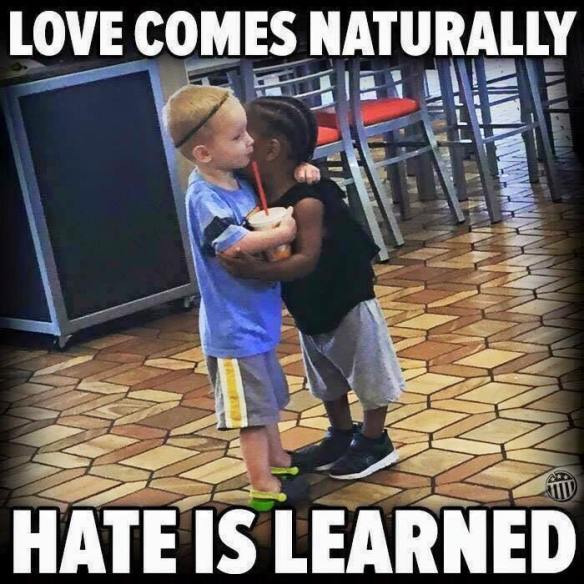
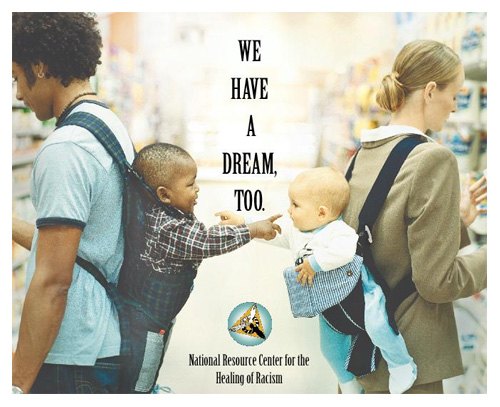
No one comes out of the womb a racist.  No ones born harboring hateful, prejudicial thoughts or views toward others.  But, that baby grows up, and like a sponge soaks up the liquid into which it is dipped, children soak up the attitudes and perspectives of those people into whose lives they are submerged.

Dr. Martin Luther King Jr. speaks to this when speaking of the Commissioners of Montgomery, Alabama who opposed him and his movement:

“They say the things they say about us and treat us as they do because they are taught these things.  From the cradle to the grave, it is instilled in them that the Negro is inferior.  Their parents probably taught them that; the schools they attended taught them that; the books they read, even their churches and ministers taught them that…”
“because they are taught these things.”
It was gracious of Dr. King to chalk up the hateful, racist, murderous views and actions of people to their upbringing.

If he is right, then Yoda’s words to Luke are right, “You must unlearn what you have learned.”  If I unlearn what I’ve learned, what do I relearn?  Maybe Jesus offers me the education I need:

“Take my yoke upon you. Learn of me because I am gentle and humble in spirit…” (Matthew 11:29).  

Jesus invites me to learn a new way. It is the way of my identity in God – my “true self” – Thank you Thomas Merton.  The way of gentleness and humility, the way of love.

God creates us in God’s own image.  Take a moment to let that sink in.  That’s big.  Teresa of Avila says our soul refers to our God-given godly nature.  Our God-given godly nature is the infinite reality of us.  Since God’s essence is love (1 John 4:8), we are love.

Let’s learn to live out who we are – to live out love.

And then let me take the test again.


Karma and the DMV

patricia_belcher_geico-1

I had a great time at the DMV this week.  Yes, you read that correctly.  I had a great time at the DMV this week.

“Great time” and the DMV don’t usually go together.

Frustration and the DMV

Irritation and the DMV

Annoyance and the DMV

Time Vacuum and the DMV

But not “Great Time” and the DMV.

I was late, by 8 months, in renewing the tags on my 1973 VW Super Beetle.  I know.  I feel ashamed.  I was prepared for a big fine and a big lecture – or at least a condescending look.

On top of being late, when I handed my insurance document to the DMV clerk, she informed me that It was missing the VW’s VIN.  Rats!!! Maxwell the Geico pig in the above pic, had all the pertinents.  I didn’t.  I knew what that meant.    No renewal tags for me.  Time wasted.  Frustration. Irritation.

I had a choice.  How will I respond?  I thought before I spoke – which doesn’t happen a lot!

I have been studying “Karma.”   I know, a lot of Christians blow a Bible gasket when karma is mentioned.  I’m not sure why.  Maybe it’s because the word comes from faith expressions they think as wrong.  But is it wrong?

Karma means action.  It’s the old, “For every action there is an equal and opposite reaction” law of Newton.

“Karma” is defined by Urban Dictionary as “getting what you give” or “reaping what you sow.”  Whoa.  Urban Dictionary is using the Bible to define karma.  Hmmmm.

“Do not be deceived:  God cannot be mocked.  A man reaps what he sows.  Whoever sows to please their flesh, from the flesh will reap destruction; whoever sows to please the spirit, from the spirit will reap eternal life.  Let us not become weary in doing good, for at the proper time we will reap a harvest if we do not give up.  Therefore, as we have opportunity, let us do good to all people, especially to those who belong to the family of believers” (Galatians 6:7-10).

“Do not judge others, and you will not be judged.  Do not condemn others, or it will all come back against you.  Forgive others, and you will be forgiven (Luke 6:37).  

And then, the part of this passage that most preachers read right before the offering, while skipping the most convicting part above:

“Give and it will be given to you.  A good measure, pressed down, shaken together and running over, will be poured into your lap.  For with the measure you use, it will be measured to you” (Luke 6:38).  

Jesus applies the “karma” principle to how we treat people.  How we treat others is how we’ll be treated.  I tried it at the DMV.

“Thank you for being so thorough,” I told the clerk.  “You’re good at what you do.”

I intentionally chose against irritation in favor of appreciation.

The result?  The clerk said, “You’re a nice guy.  We can figure out a way to make this work.”

I walked out with the new stickers for my old Beetle.

Did Karma work?  Was she nice to me because I was nice to her?
I don’t know.  Maybe she was jus a nice gal.

But, I do know that being nice made me feel better inside.

Being nice may be its own reward.

Call it Karma.  Don’t call it Karma.  But be kind.

Joseph, Mary and Roy Moore


I really try to be apolitical in my comments. There are, in the church I pastor, people of all politcal parties.   I like that.   My thoughts, here, are not coming from the heart of a Republican or Democrat, a Conservative or Progressive.

They are coming from the heart of a guy who is tired and frustrated with people using the Bible to justify wrong.

It’s been done a lot and for a long time.

We are about to celebrate Thanksgiving Day.  For a lot of Americans, however,  it’s a Day of Mourning for what was done to the Native Americans by the settlers from Europe.  For many it is “a reminder of the genocide of millions of Native people, and the theft of Native lands, and the relentless assault on Native culture.”

Much of the horrific acts were committed by those using the Bible as justification.

Stealing the land from the Native Americans?  Justified!  The Puritans saw themselves as Israel of old, God’s Chosen. The land of the Native Americans was the Europeans’ inheritance from God.   As Israel was given the land of Canaan then, these European Christians are given this land of America now!  Want a Scripture?  They had one.  No, they had several:

“However, in the cities of the nations the LORD your God is giving you as an inheritance, do not leave alive anything that breathes (Deuteronomy 20:16).

“My angel will go ahead of you and bring you into the land of the Amorites, Hittties, Perizzites, Canaanites, Hivites and Jebusites, and I will wipe them out (Exodus 23:23)!

“I will establish your boundaries from the Red Sea to the Mediterranean Sea, and from the desert to the Euphrates River.  I will give into your hands the people who  live in the land, and you will drive them out before you (Exodus 23:31).  

“Since God gave this land to us, we can take it from you!”

The use of the Bible to justify horrific behavior continues. This week.

Allegations of sexual misconduct with teen-aged girls by Senatorial candidate Roy Moore when he was in his 30s, broke  in The Washington Post.  One of Moore’s defenders, Alabama State Auditor Jim Zeigler, used the Bible to defend Moore:

“Take Joseph and Mary.  Mary was a teenager and Joseph was an adult carpenter.  They became the parents of Jesus…There’s just nothing immoral or illegal here.  Maybe just a little bit unusual…There’s nothing to see here.”  

Did he really say that? Is he serious?  Here’s the thing:

A 32 year old man dating a freshman in high school? “A little unusual,”  Zeigler says.  You think?  I can think of other ways to describe it. How about, Gross.  Creepy.  Wrong.

And now,  Zeigler justifies and defends Moore with the story of Joseph and Mary.  Really?  Is that how we read and apply the Bible?

In the culture and time of Joseph and Mary, women were property of their fathers, then of their husbands.  Yes women married much older men and men had multiple wives. Is that a Biblical mandate for us today?  “They did it then, let’s to it now!”

To equate the molestation of a minor with marriage customs of an ancient culture is ridiculous.  It is dangerous.

Unfortunately, history is filled with the ridiculous and dangerous when it comes to interpreting and applying the Bible.

The allegations against Roy Moore are disturbing.   So is justifying his behavior with the Bible.


Mackinac Island and Columbus Day

Columbus statue

“For American Indians, Columbus Day is not a typical holiday.  We don’t celebrate 500 years of being dominated, exploited, enslaved and nearly exterminated by Europeans.  But we do celebrate our survival.”  Diana King, teacher Waubun High School, Minnesota

Before last week, of the two names in the title, I only knew Columbus.  But last week, Denise and I visited Mackinac Island.  The island is located in the straits between Lake Michigan and Lake Huron.  In 1898 cars were banned on the island.  Today all travel is by horse, bicycle or foot.  We chose bicycle.  I can control a bike better than I can control a horse.

Fun, beautiful ride.  It was weird though watching for cars that weren’t there.  We learned that the 8 mile trek around the outskirts of the island was called, “Native American Cultural History Trail,” and is marked by 6 interpretative panels describing the Native American experience on the island.

It wasn’t pretty.  Oh, the scenery was pretty.  The story was not.  Unless you like a story of Native Americans being robbed of their land by white settlers, stripped of their language, culture and religion.

The Treaty of 1836, ceded 13,837,207 acres in the northwest portion of the Lower Peninsula and the easter portion of the Upper Peninsula to the U.S government. The treaty made it possible for the Michigan Territory to be granted statehood and admission to the Union, but it didn’t do much for the Anishinaabek Native Americans.

The U.S. agreed to pay for the land and guarantee the Native Americans permanent land and access to hunting and fishing rights.  But once the Anishinaabek representatives left Washington, Congress, reworked the treaty.  Isn’t that special?

Permanent rights to the land?  No more.   Now they had five years, after which the U.S. could forcibly remove them from Northern Michigan.

The treaty was nothing short of government-sponsored ethnic cleansing of the Anishinaabek culture.   Their social customs and languages were suppressed.  Their religion was made illegal.

“Indian Schools” arose between 1880-1935 in which the Native Americans endured “forced assimilation.”  The children were to become “civilized” in white culture, language and religion.  Failure to abandon their own language or spiritual beliefs resulted in severe punishment.

Honestly, the hard facts on those panels lessened a bit the joy of the ride.

What would we do if a foreign power invaded our community, broke their agreement with us, made the practice of our religion illegal, suppressed our customs and language?

We wouldn’t think it was right if it happened to us.  Do you think it was right that it happened to them?

Now we come to the other name in the title: Columbus.  Monday, October 9, was Columbus Day.  But many communities around the country have booted Columbus in favor of  “Indigenous Peoples Day.”

“No sensible Indian person,” wrote George P. Horse Capture, “can celebrate the arrival of Columbus.”

Columbus didn’t show much of the Jesus he claimed to follow.   Columbus’ voyages were religious missions.  He put it like this: “God made me the messenger of the new heaven and the new earth of which he spoke in the Apocalypse of St John (Rev. 21:1) after having spoken of it through the mouth of Isaiah; and showed me the spot where to find it.”

Columbus’ strategy for creating the new heaven and the new earth?  Forced conversion, rape, pillaging, slavery, genocide.

Doesn’t sound like Jesus, to me.

Bartolome de las Casas,  a young priest who participated in the conquest of Cuba and wrote a history of the Indies, agreed.  He describes the treatment of the natives: “Endless testimonies…prove the mild and pacific temperament of the natives….But our work was to exasperate, ravage, kill, mangle and destroy; small wonder then, if they tried to kill one of us now and then…The admiral, it is true, was blind as those who came after him, and he was so anxious to please the King that he committed irreparable crimes against the Indians…”

Here are some lessons I’m learning:

*Columbus left a legacy on how not to treat people.  Captain John Smith used Columbus as a role model on setting a “get-tough” policy against Native Americans in Virginia in 1624.  The Pilgrims and Puritans sold the survivors of the Pequot War into slavery in Bermuda in 1637.  Was the treatment of the Michigan Native Americans traceable to Columbus?  His legacy casts a long shadow.

What legacy am I leaving?

*Columbus was a devoted Christian.  An avid Bible-reader.  His journals are filled with references to Christ, Mary and the saints.  How then, could he treat people this way?

What in my life is inconsistent with the life of Jesus I profess to follow?


Nerdy or Cool? False Self or True Self?

nerdy-glasses-then-now-niall

I thought the days of glasses being nerdy were over.

You know, “Four Eyes?”

I thought what was considered nerdy yesterday was  considered hipster and hot today.  Just take a look at all the celebs wearing “nerd” glasses.  Ask Russell Westbrook of the Oklahoma City Thunder what’s up with the Clark Kents he wears during the post-game interviews.  Russell’s glasses don’t even have lenses in them.


russell-westbrook-hipster-outfit

“Russell, why do you wear glasses without lenses?”

His answer?  “I see better without ‘em.”

Glasses don’t mean “I spend all day at the library” anymore.  Now, glasses mean, “I have amazing fashion sense.”

Evidently, classmates of my Lunch Buddy didn’t get the memo. My Lunch Buddy at a local elementary school (Lunch Buddy is a program of Big Brothers/Sisters), got glasses over the summer.  I saw them on my first visit with him in the new school year.

Here’s our conversation:

Me: “Hey, cool glasses!”

Him: “I don’t think they are.”

Me: “Why don’t you think they’re cool?

Him:  “Hmmm.   I don’t know.”

Me: “What do your friends say about them?”

Him: “They call me a nerd.”

I asked the boy (who happened to have a speech impediment) sitting next to my Lunch Buddy what he thought of the glasses.

“I like them,” he said.

“Now, you are a friend!” I told him.

Here, on the other side of the table where I was sitting,  was a boy with glasses who is called a “nerd” because of the glasses, sitting next to a boy with a speech impediment.

I know about speech impediments.  I went to speech therapy for 5 years in elementary school.  I know how childhood labels stick.

Maybe you do too.

Labels that people put on us stay with us.  Shape us.  From these labels put on us we develop our sense of self.

My mom died 7 months ago.   She was a beautiful lady, inside and out. She wasn’t convinced.  I think she felt sure about the inner beauty but not so much about the outer beauty.  When she was an impressionable young girl, her dad told her that while she was smart, she wasn’t very pretty.

That perception became her perception.

I’m reading Divine Therapy by Thomas Keating.  In that book, Father Keating, a “member of the Cistercian Order in the Benedictine tradition“  (from Amazon’s “About the author” page), talks about the “True Self” and the “False Self.” The False Self, he says, is created when we experience emotional trauma throughout our lives.

The False Self “develops as the survival mechanism in early childhood, to deal with the frustration of the instinctual needs that the child feels are not being provided.”  Those needs are summarized in the categories of power/control, esteem/affection, and security/survival.   When those needs are not met we develop attachments to people, places, behaviors, situations that brings us comfort in the absence of those needs being met.

For Keating, the False Self is our wounded self.

Wounds:

Overhearing a dad say, “I wish he was more like his brother.” So this child grows up imitating his brother to achieve his dad’s affection.

Being rejected or abandoned as a child.  Out of fear of being abandoned, this child, grown into an adult, leaves a partner, or drops a project.   “I’ll leave before being left.”

Being called a “nerd,” being teased and/or bullied.  So, up goes a protective shield – either withdrawing into a shell like a turtle, or turning the tables and teasing, bullying, humiliating others.

Hearing your dad, to your face, say you’re “not too pretty, but…”  Did she even hear what came after the “but”?

All of these wounds create our False Self – a hurt, angry, insecure, unsure self, hiding the True Self.

The True Self is that part of us made in the image of God – “a brilliant jewel even though it’s at the bottom of a pile of garbage.”  The True Self, in God’s image:

*is good

*is capable of feeling and expressing the goodness of God

*is the place of the fruit of the Spirit, the evidence of the Divine Presence – love, joy, peace, patience, kindness, gentleness, goodness, self-control.

How can I let the true self live and the false self – die?  Oh.   Maybe that’s it.  Die.
Is this what Jesus meant when he said,

If any want to become my followers, let them deny themselves…? Luke 9:23

…unless a grain of wheat falls into the earth and dies, it remains just a single grain, but if it dies, it bears much fruit. John 12:24

Maybe the self to be denied, the self to die, is the false self!

Let it die so the True Self can live!

The solution for Keating is experiencing “Divine Therapy” through Centering Prayer.  As we get deeper into the presence of God, we see the hurts of the past, we hear the names of our childhood.  We meet our False Self.  And then let it go.

We meet our True Self – good, loved, accepted, worthy, purposeful, and loving.  We embrace it.  We express it.

We are my Lunch Buddy and my mom.  We all have been wounded.

I’m on a journey.  I’m learning to let go of the nerdy and False Self and live out the cool and True Self.  And I want to take my Lunch Buddy with me.